Total Pageviews

Wednesday, October 29, 2014

How Napoleon fixed and broke Europe.

*This blog post was supposed to be posted around the 15th, but for some reason was not.

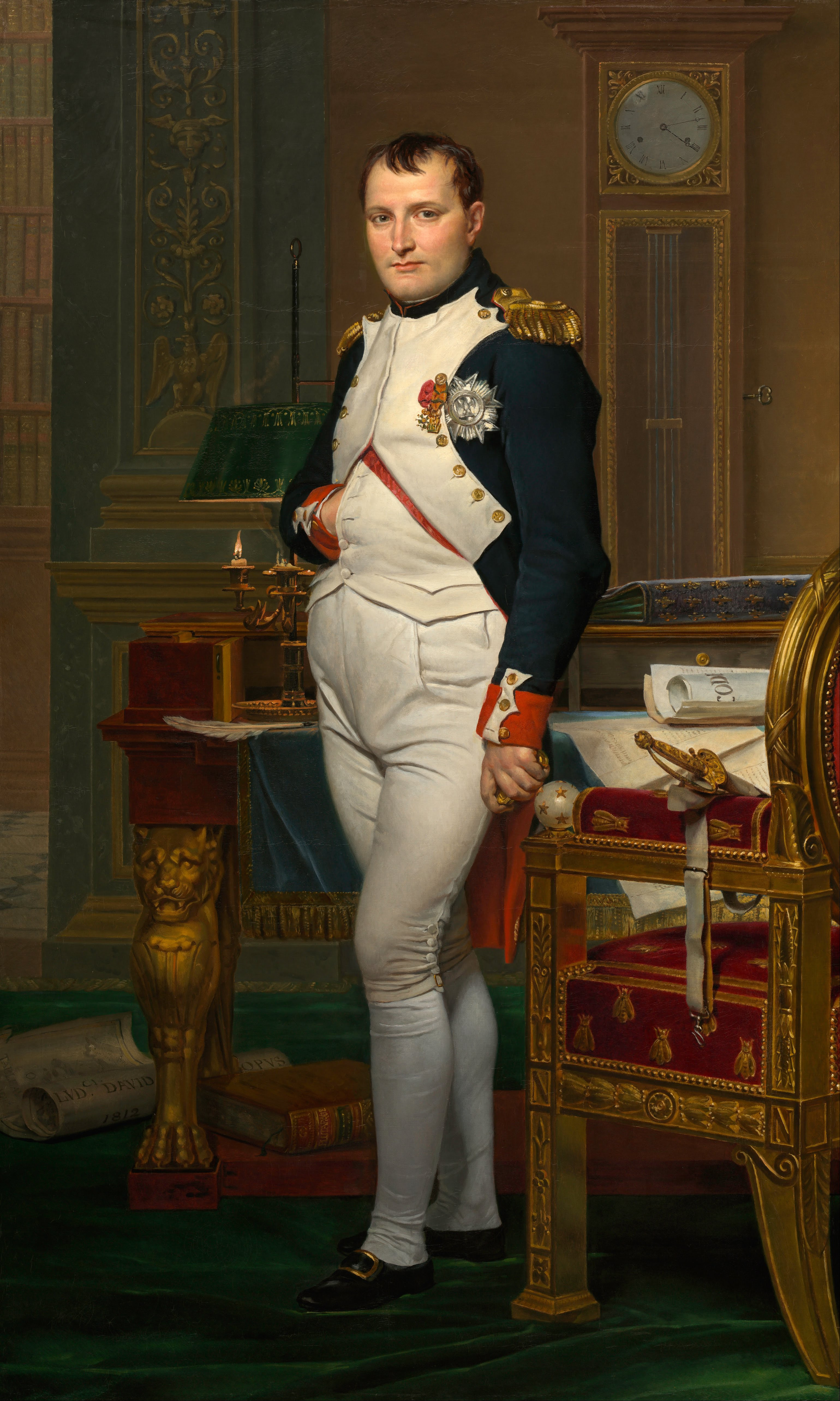
In class, we recently reviewed Napoleon, and his impact on the European nations. Napoleon conquered much of Europe in the nineteenth century. However, while he wanted to be the ruler of all of Europe, he was not all of a bad person. Much of the people in the countries he conquered were given more rights in the end then they started with. Most rulers in power stayed in power, they just had to follow what Napoleon told them to do. Really, the biggest difference is that most of Europe belonged to France. With more people having rights, people were happier, just not those with power. Napoleon afterwords inspired some countries to move to a constitutional monarchy after Napoleon was defeated, to keep some of the people who had rights under his rule, with rights.

Tuesday, October 28, 2014

Congress of getting stuff done, probably.

In class, we started discussing the congress of Vienna following the reign of Napoleon. It consisted of 4 countries; Great Britain, Prussia, Austria, and Russia. It was also joined by France later, after they reestablished their government. The congress discussed how they should handle France to prevent the spreading of revolution, as the ideas that were widley spread by the revolution were still talked about, and by many, preferred to the current system of government.
 This congress was also effective in talking about what they planned for rotecting eachother's power, including the right for one country to go into other countries to stop and revolution. This was both a good in bad thing for the people involved, as it meant that less people would die in these revolutions. However, these revolutions were not all bad. While they were bloody, and violent, they were often necessary to bring change to an unjust rule. But, at least like I said they avoided all the bloodshed that could have occurred. It should also be noted that Great Britain did not participate in this.
Regarding my opinion on this congress, I have mixed feelings on it. I think they had the right ideas in mind, but their goal was to keep powerful people in power and keep people where they are in life, which for the majority of the people living was not a good thing. At least they did not punish the people of France, since this really was not their fault.

Tuesday, October 21, 2014

Ideologies - How government actions should work


In class, we just learned about some political Ideologies, specifically Liberalism, Conservatism, and Nationalism. My group specifically worked on defining liberalism and what it would be like in the 18th and 19th centuries.  In class, there were two groups who had each subject and we had to make a minute long video or some form of presentation that was a minute long. My group used a program called chatterpix which allows you to make pictures speak and record your voice over it.

This was my groups project. Note: Not my voice in recording

Liberalism was an interesting idea. It focuses mostly on new things that seem to work, and eliminates any traditions that don't work or are unnecessary. This most benefits the middle class as they also get much more of a say in the government. Liberalism was not supported very much in Europe, as most people trying to find a system that works were upper class, and therefore favored conservatism, as it put monarchies back into place, and would keep most nobles where they are on the social latter.

The two other ideologies we talked about were nationalism and conservatism. Nationalism most benefited the poor, as it united the smaller states of a country to have a role in the government. Conservatism is mostly believing in restoring things to the way they were. This was the most supported, as it would keep the rich rich and in power over all the people.

Thursday, October 9, 2014

Why the economy is forever screwed

Recently in class, we have been discussing different economic systems and how they came to be. This proved both interesting and frustrating to me, as I have always been interested in world economy and how it functions, but frustrating as it is very hard to find an economic system that works. The 3 we discussed were communism, capitalism, and socialism.

Karl Marx and Adam Smith are the two people credited most with the development of these theories. Both of them wanted to help the poor, but in very different ways. In Marx theory of communism, resources would be spread evenly among everyone, therefore there would not be a poor or rich, or a government all together, as there would be piece as no one would fight over resources. In capitalism, over time the economy would slowly even itself out leading to higher quality goods at lower prices. In socialism, there are less regulations over products, making it easier to sell goods no matter what the quality is. Also, Smith's theory on the invisible hand, which is the source of most theories he is part of, was the theory that is the government stayed out of the way of economics, then it would slowly over time rise to become a better over all economy. This would help the poor as an over all better economy results in more chances for someone to gain more wealth, and more jobs that have to be filled with people.

In my opinion, Capitalism is the best. It seems to me like the most reasonably attainable economic system there is. While along the way of setting it up it would be hard, over time the economy would benefit the most out of it. It would be harder to 'get going' along the way, as starting out the system stalls and massive job loss occurs. The problem is that this system is almost worse to the economy then the systems in place today. Below is 3 videos, one on Marx, one on Adam Smith and one explaining the invisible hand theory.


Monday, October 6, 2014

The pull of the mills


Most people know about the Lowell mills. For those who don't know, it was almost forced labor for young to late teen girls to weave, with awful conditions and small pay. But what possible motivations could these girls have had? 

The people who would recruit the girls were very smart. In a way, they would try to appeal more to the girl than the parents. In a video we watched in class about a specific girl's experience, the person would try to convince the parents. They would be told of all the benefits, but the parents were not convinced. The girl then took what she heard and glorified it to her parents. 

The mills were not all bad. It gave some families an income that some needed. It gave experience with the real world to the girls.  The big city seemed interesting to most people, as they worked on farms. But the big thing about it was it was the beginning of girls working. Before this, girls stayed at home, and it was unheard of for them to be working. At the same time, people at the time were really confused, and almost disgusted at the thought of the girls working, as again, it was unheard of. 

However, the good part of the mills stops there. The conditions were awful, leading to many children being mutilated, maimed, and not uncommonly killed by the machines they were working with. Over time, as the demand for cloth dropped, so did wages for the girls. They were getting paid almost nothing, making their roll at the mill almost pointless.